What Is a Deblistering Machine?
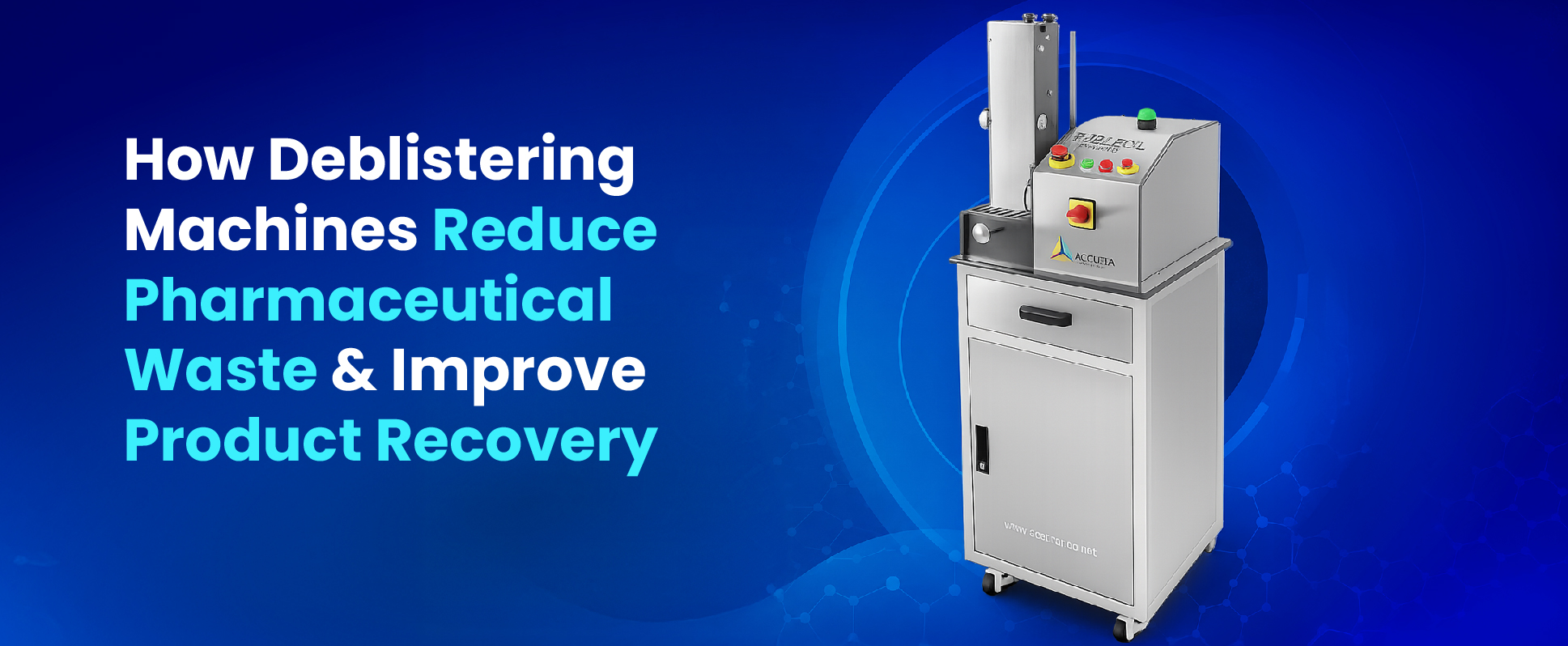
A deblistering machine is a specially-designed pharmaceutical machine that recovers tablets or capsules from rejected or defective blister packaging, while preserving the integrity of the product. These machines are used to rapidly, efficiently, and safely (in terms of sanitation) remove your product from blister packaging material, with minimal hands on contact.How Does It Work?
The blister packs are fed into the equipment. Controlled pressure and precision rollers in the machinery can then remove tablet(s) or capsule(s) from the individual pockets of the blister pack. The extracted product will be segregated based on quality and intended use (i.e. for inspection/rework/approved reuse as per GMP).Compatible Packaging Types
- Alu-Alu blister packs
- PVC blister packs
- Capsules
- Tablets
Major Causes of Pharmaceutical Waste in Blister Packaging
Pharmaceutical packaging lines can experience product losses for several reasons. Understanding these issues helps manufacturers reduce waste and improve recovery planning.A. Packaging Defects
Improper Sealing
Products are damaged by defective seals resulting in a large number of reject blister packs.Foil Damage
Damage to either the upper or lower foil layer of blister packs during production or shipment results in the product being completely unusable.Misaligned Cavities
Poor cavity alignment results in inconsistent packaging which can also be a reason for rejecting a particular batch of products.B. Batch Rejections
QA Failures
Complete batches of pharmaceutical products that have failed quality assurance tests must be destroyed and replaced.Labeling Issues
Failure to properly label products or labeling errors may cause a complete batch of products to be rejected as well as all related packaging materials.Product Recalls
Some types of recalls will necessitate the removal of safe products from their original packaging materials.C. Changeover & Production Errors
Wrong Product Insertion
Error resulting from wrong product inserted into package.Packaging Line Adjustments
Errors created during machine adjustments or calibration results in temporary waste generated on the packaging line. These challenges contribute significantly to pharmaceutical packaging waste, increasing the cost associated with rejected blister packs and overall product loss in pharma manufacturing. Also Read: Semi-Automatic vs. Automatic Deblistering Systems — Choosing the Right Fit for Your Pharma FacilityHow Deblistering Machines Improve Product Recovery
A. High Product Recovery Rate
Deblistering machines are developed to improve tablet/capsule recovery rates by extracting product from blisters efficiently with minimal loss due to breakage or surface damage.Key Advantages
- High recovery efficiency
- Minimal product damage
- Reliable separation process
B. Reduction in Material Loss
Many pharmaceutical formulations involve expensive APIs and production costs. Recovering usable products helps manufacturers avoid unnecessary financial losses.Benefits
- Recovery of high-value formulations
- Reduced disposal expenses
- Lower packaging waste generation
C. Faster Reprocessing
Manual product recovery can be slow and labor-intensive. Automated deblistering systems significantly improve recovery speed.Operational Improvements
- Faster batch handling
- Reduced downtime
- Improved packaging line efficiency
D. Reduced Human Handling
Automated recovery systems reduce direct operator contact with pharmaceutical products.Advantages
- Better hygiene standards
- Lower contamination risks
- Improved operator safety
E. Support for GMP Compliance
Modern deblistering systems are designed to support cleanroom operations and GMP requirements.Compliance Features
- Controlled recovery process
- Easy-to-clean construction
- Validation-friendly design
- Documentation support
Estimated Operational Benefits
| Parameter | Typical Improvement |
|---|---|
| Product Recovery Efficiency | Up to 95–98% |
| Manual Recovery Time Reduction | Up to 70% |
| Packaging Waste Reduction | Significant decrease |
| Labor Dependency | Reduced considerably |
Industries & Applications
Deblistering machines are widely used across multiple healthcare and packaging sectors.Applications Include
- Pharmaceutical Manufacturing: Recovery of tablets and capsules from rejected blister packs during commercial production.
- Nutraceutical Production; Efficient extraction of vitamins, supplements, and health products from defective packaging.
- Clinical Trial Packaging: Recovery of trial products during packaging corrections or batch changes.
- Contract Manufacturing Organizations (CMOs): Support for high-volume recovery operations across multiple client product lines.
Manual vs Automatic Deblistering Mac
| Feature | Manual | Automatic |
|---|---|---|
| Speed | Low | High |
| Recovery Efficiency | Moderate | Excellent |
| Labor Requirement | High | Low |
| GMP Compliance | Basic | Advanced |
| Production Volume | Small | Large |
Need Help Selecting the Right Machine?
Choosing the correct deblistering system depends on:- Production volume
- Packaging type
- Product sensitivity
- Automation requirements
- GMP expectations
Key Benefits for Pharmaceutical Manufacturers
- Lower operational losses
- Better ROI on rejected batches
- Improved sustainability goals
- Enhanced production efficiency
- Reduced labor dependency
- Better inventory recovery
- Faster packaging line recovery
- Improved process hygiene
Why Choose Accura Pharmaquip
Accura Pharmaquip delivers reliable pharmaceutical machinery solutions designed to meet modern industry requirements.- Expertise in Pharmaceutical Machinery: Deep understanding of pharmaceutical packaging and recovery processes.
- GMP-Compliant Equipment Design: Machines designed for clean, safe, and compliant operations.
- Robust Construction: Built for durability, long service life, and consistent performance.
- Customization Capabilities: Solutions tailored to different blister formats and production requirements.
- Strong After-Sales Support: Technical assistance, maintenance support, and operational guidance.
- Industry Experience: Trusted by pharmaceutical manufacturers across various production environments.
Conclusion
Deblistering machines are a key tool for the Pharmaceutical industry’s goal to be less wasteful, save money by recovering wasted product, and make processes more productive. By enabling efficient recovery of tablets and capsules from rejected blister packs, these systems help companies:- Reduce manufacturing losses
- Improve sustainability efforts
- Lower disposal costs
- Increase profitability
- Enhance GMP-compliant operations
FAQs
What is the recovery efficiency of a deblistering machine?
The recovery efficiencies of Modern automatic deblistering machines depend on the nature of the products being processed as well as the materials used in the manufacture of the blister packaging. Recovery efficiencies may range from approximately 95% to 98%.
Can deblistering machines recover both tablets and capsules?
Most new deblistering machines are capable of processing both tablets and capsules. In addition, they are capable of handling various different blister formats.
Are deblistering machines GMP compliant?
Pharmaceutical grade deblistering equipment meets all requirements for GMP compliance in terms of its construction and hygienic operation.
What types of blister packs are supported?
Deblistering machines commonly support:
- Alu-Alu blister packs
- PVC blister packs
- Combination blister formats
Is automatic deblistering suitable for high-volume production?
Automatic deblistering systems are particularly suited for use in high-volume production environments, which require that products are produced quickly and efficiently at consistent levels of quality.