The pharmaceutical industry relies on precision, hygiene, and quality at every stage of production. From manufacturing tablets and capsules to preparing products for distribution, every process must be carefully managed to maintain product integrity and meet quality standards. A Pharma Packing Machine plays an important role in this process by helping pharmaceutical manufacturers streamline packaging operations, improve consistency, and protect products during handling and transportation.
With advancements in automation and inspection technology, pharmaceutical packaging lines are becoming more efficient and reliable. Choosing the right machinery can help manufacturers reduce manual intervention, improve operational performance, and maintain consistent product quality.
At Accura Pharmaquip, we understand the importance of precision-engineered equipment in pharmaceutical manufacturing. Our solutions focus on inspection, product handling, counting, and packaging-line support to help pharmaceutical companies strengthen quality control and production efficiency.
In this blog, we explore the different types of pharma packing machines, their applications, and the key benefits they offer to the pharmaceutical industry.
What Is a Pharma Packing Machine?
A pharma packing machine is specialized equipment used to package pharmaceutical products in suitable containers or packaging materials. Depending on the application, these machines may perform functions such as filling, sealing, blister packaging, bottle packing, labeling, coding, counting, and final product inspection.
The primary objective is to ensure that pharmaceutical products are packaged accurately, consistently, and securely before they reach distributors, healthcare professionals, or consumers.
Modern pharmaceutical packaging systems may operate independently or as part of an integrated production line. Their configuration depends on the type of medicine, packaging format, production volume, and applicable regulatory requirements.
Types of Pharma Packing Machines
Different pharmaceutical products require different packaging methods. The following are some common types of machines used in pharmaceutical packaging and associated production processes.
1. Blister Packing Machines
Blister packing machines are widely used for packaging tablets and capsules. They place individual doses into formed cavities and seal them with suitable lidding materials, such as aluminium foil.
Key applications:
- Packaging tablets and capsules in unit-dose formats.
- Protecting products from contamination and handling damage.
- Supporting organized product presentation and distribution.
Blister packaging can also help protect products from environmental exposure when the appropriate materials and sealing processes are selected.
2. Bottle Filling and Packing Machines
Bottle packing systems are commonly used for tablets, capsules, syrups, and other pharmaceutical products. Depending on the configuration, these systems may include filling, counting, capping, sealing, and labeling equipment.
Key applications:
- Counting tablets and capsules into bottles.
- Filling liquid pharmaceutical products into containers.
- Applying caps, seals, and labels.
- Preparing containers for secondary packaging.
Accurate filling and counting are essential for maintaining consistent pack quantities and reducing product wastage.
3. Strip Packing Machines
Strip packing machines package tablets and capsules between layers of suitable packaging material. The material is sealed around individual doses or groups of doses to create protective strips.
Key applications:
- Packaging solid oral dosage forms.
- Supporting unit-dose and multi-dose packaging formats.
- Providing protection against external environmental factors, depending on the packaging material.
The appropriate strip packaging configuration depends on the product’s stability requirements, material compatibility, and intended shelf life.
4. Cartoning and Secondary Packaging Machines
Cartoning machines place primary packages, such as blister strips or bottles, into cartons. Depending on the system, they may also insert package leaflets, close cartons, and prepare products for further packing.
Key applications:
- Packing blister cards into cartons.
- Placing bottles and other containers into outer packaging.
- Inserting patient information leaflets.
- Preparing products for case packing and distribution.
Automated cartoning can improve packaging consistency and reduce repetitive manual work.
5. Labeling and Label Inspection Systems
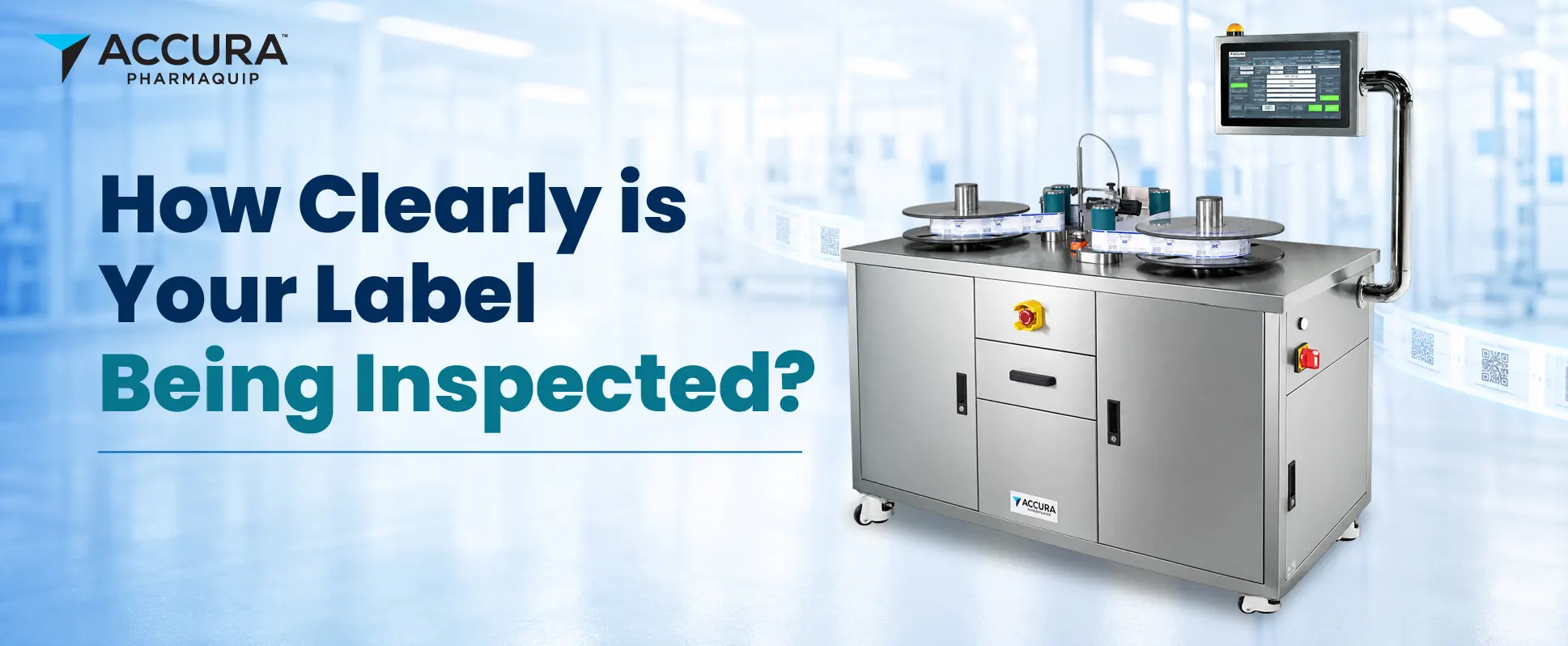
Labeling systems apply product labels to bottles, cartons, and other packaging formats. Label inspection equipment helps verify that labels meet specified quality and identification requirements.
Key applications:
- Applying product and batch identification labels.
- Checking label presence, position, and print quality.
- Supporting verification of important product information.
- Helping identify labeling defects before products move to the next stage.
For pharmaceutical manufacturers, correct labeling is essential because it supports product identification, traceability, and safe handling.
6. Tablet and Capsule Inspection Machines
Although inspection machines do not replace primary packaging equipment, they play a critical role in pharmaceutical production and packaging workflows. They help identify visible defects before products proceed to subsequent stages.
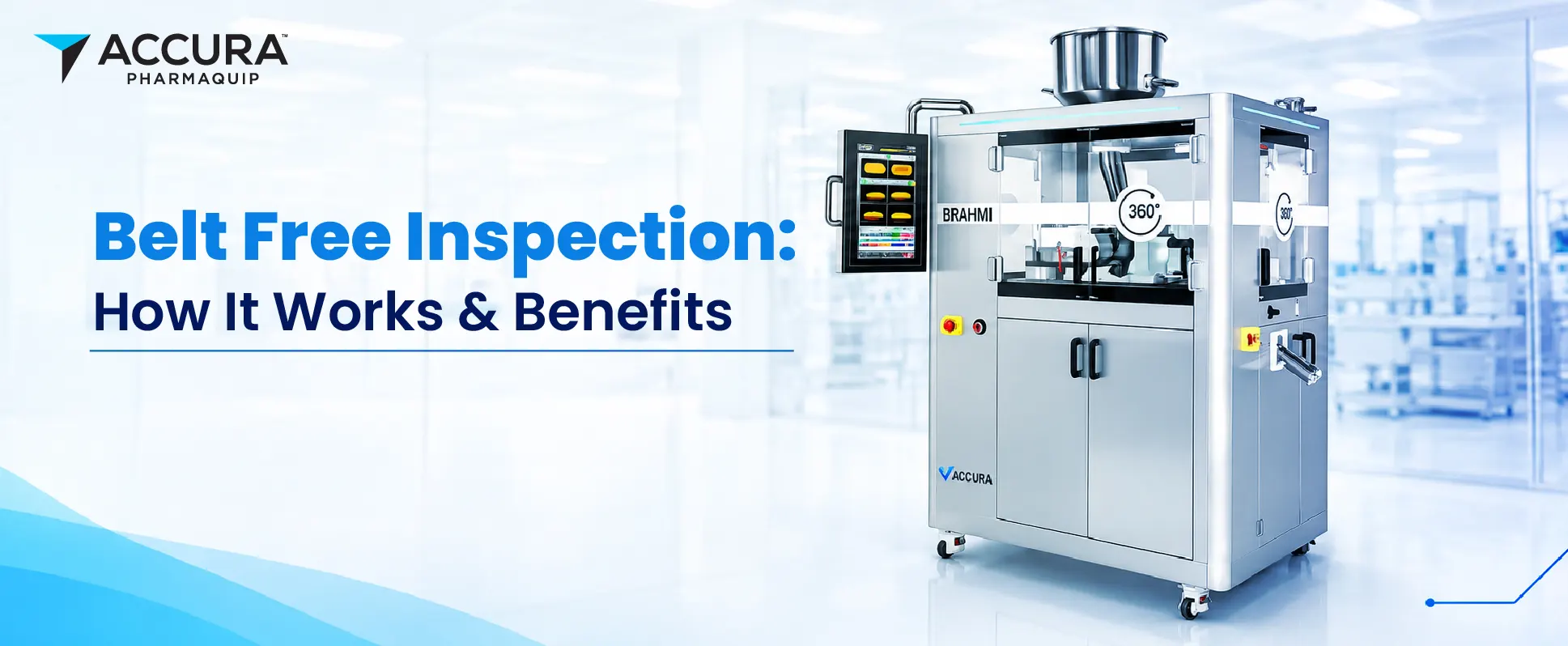
At Accura Pharmaquip, our inspection solutions include systems such as BRAHMI, NETRA VS6, Q1P, and QSI for tablet and capsule inspection, along with specialized equipment for other inspection applications.
Key applications:
- Detecting visible surface defects and appearance variations.
- Identifying defective tablets and capsules for rejection.
- Supporting consistent product quality before packaging.
- Reducing the risk of defective units entering finished packs.
Integrating suitable inspection systems into a production line can strengthen quality assurance and improve confidence in finished products.
Applications of Pharma Packing Machines in the Pharmaceutical Industry
Pharma packing machines support a wide range of manufacturing and packaging operations. Their applications depend on the product type, packaging format, and production requirements.
1. Tablet and Capsule Packaging
Solid oral dosage forms are commonly packed in blister strips, bottles, and other approved packaging formats. Counting, feeding, inspection, and packaging equipment work together to maintain consistency throughout the process.
2. Liquid Pharmaceutical Packaging
Liquid medicines, including syrups and oral solutions, may require specialized filling, capping, sealing, and labeling systems. Equipment must be selected according to liquid characteristics, container design, and filling accuracy requirements.
3. Injectable and Sterile Product Packaging
Injectable products require specialized packaging equipment designed for the relevant sterile manufacturing environment. Depending on the product, packaging operations may involve vial or ampoule filling, stoppering, sealing, inspection, and labeling.
These applications require appropriate contamination-control measures and validated processes.
4. Nutraceutical Packaging
Vitamins, dietary supplements, and other nutraceutical products may be packaged in bottles, blister packs, sachets, or containers. Counting and inspection equipment can help maintain consistent product quality during packaging.
5. Packaging-Line Quality Control
Inspection and verification systems can be integrated into packaging workflows to identify defects, verify product presentation, and support traceability. These systems help manufacturers detect potential issues before products are released for distribution.
Key Benefits of Using a Pharma Packing Machine
Investing in suitable pharmaceutical packaging equipment can deliver several operational and quality-related benefits.
1. Improved Production Efficiency
Automated packaging systems help streamline repetitive tasks and reduce unnecessary manual handling. When correctly configured, they can support higher throughput and more consistent production schedules.
2. Greater Packaging Accuracy
Automated counting, filling, sealing, and labeling systems can help minimize variations between packs. Accurate operation is particularly important when handling dosage forms that require consistent quantities.
3. Enhanced Product Protection
Appropriate packaging materials and properly maintained equipment help protect medicines from contamination, moisture, light, and physical damage where relevant. The level of protection depends on the product and packaging design.
4. Reduced Product Wastage
Accurate product feeding, counting, inspection, and rejection processes can help reduce packaging errors and unnecessary material consumption. Early defect detection may also prevent larger quantities of products from being affected by the same issue.
5. Better Quality Control
Inspection systems help identify visible defects and packaging irregularities. When combined with documented procedures and appropriate quality checks, they support a more consistent approach to pharmaceutical quality management.
6. Reduced Manual Intervention
Automation can reduce repetitive handling and improve workflow consistency. This may help manufacturers use personnel more effectively while reducing the risk of handling-related errors.
7. Improved Traceability and Compliance Support
Suitable packaging and inspection systems can support batch identification, label verification, data recording, and traceability. However, regulatory compliance depends on the complete equipment configuration, validated processes, documentation, and the manufacturer’s quality management system—not simply on machine selection.
How to Choose the Right Pharma Packing Machine
Selecting the right machine is an important investment decision. Pharmaceutical manufacturers should evaluate their operational requirements carefully before purchasing equipment.
- Product type: Determine whether the equipment will handle tablets, capsules, liquids, powders, vials, or other pharmaceutical products.
- Packaging format: Identify whether the requirement involves blister packs, bottles, strips, cartons, sachets, or another format.
- Production capacity: Assess current production volumes and expected future demand to select an appropriate operating capacity.
- Automation requirements: Consider whether a standalone machine, semi-automatic system, or integrated automated line best fits the workflow.
- Hygiene and material compatibility: Evaluate product-contact materials, cleanability, and suitability for the intended manufacturing environment.
- Inspection and traceability: Determine whether visual inspection, label verification, counting, rejection mechanisms, or electronic records are required.
- Maintenance and technical support: Review service availability, spare parts, operator training, maintenance requirements, and equipment lifecycle costs.
- Regulatory requirements: Confirm that the equipment and its intended use align with applicable GMP requirements and relevant regulations for the target market.
Working with an experienced pharmaceutical machinery manufacturer can help businesses evaluate these factors and identify suitable equipment for their production lines.
Why Quality Inspection Matters Alongside Pharmaceutical Packaging
Packaging is not simply the final step in preparing a medicine for distribution. It is part of a broader quality system that includes product handling, inspection, identification, and verification.
Even a high-performance packing machine cannot compensate for defects that go undetected earlier in the process. For this reason, pharmaceutical manufacturers should consider how inspection equipment works alongside packaging machinery.
Accura Pharmaquip specializes in pharmaceutical inspection and handling solutions designed to support manufacturing quality. Our product portfolio includes automatic tablet and capsule inspection systems, tablet and capsule elevators, label counting and inspection systems, deblistering equipment, and packaging-line conveyor solutions.
These technologies can help manufacturers improve product flow, identify defects, and strengthen quality-control processes at appropriate stages of production.
By selecting compatible equipment and integrating it effectively, manufacturers can build a more consistent and efficient production workflow.
Why Choose Accura Pharmaquip?
At Accura Pharmaquip, we develop pharmaceutical machinery with a focus on precision engineering, dependable operation, and practical manufacturing requirements.
Our solutions support several important functions within pharmaceutical production, including product inspection, material transfer, label verification, and packaging-line operations.
Key areas of focus include:
- Advanced inspection technology: Systems designed to identify visible product defects and support consistent quality.
- Efficient product handling: Equipment that supports controlled movement of tablets and capsules between process stages.
- Packaging-line support: Conveyor and inspection solutions designed to complement wider packaging workflows.
- Application-focused engineering: Equipment selection and configurations tailored to specific operational needs.
- Quality and compliance support: Machinery designed with relevant manufacturing and regulatory considerations in mind.
Our goal is to help pharmaceutical manufacturers strengthen operational efficiency while maintaining a strong focus on product quality and reliability.
Conclusion
A pharma packing machine is an important part of modern pharmaceutical manufacturing, helping companies package products efficiently, accurately, and consistently. From blister and bottle packing to cartoning, labeling, and inspection, each type of equipment serves a specific purpose within the production workflow.
Choosing the right machinery requires careful consideration of product characteristics, packaging requirements, production capacity, hygiene, inspection needs, and regulatory expectations. When these factors are addressed effectively, manufacturers can improve productivity, reduce wastage, and strengthen quality assurance.
At Accura Pharmaquip, we believe that reliable inspection and handling technologies are essential components of a high-quality pharmaceutical production line. Our range of inspection and packaging-line support solutions is designed to help manufacturers meet evolving operational demands with greater precision and confidence.
Looking for pharmaceutical inspection or packaging-line support equipment? Contact Accura Pharmaquip to discuss your requirements and explore solutions suited to your manufacturing operations.
FAQs
What is a Pharma Packing Machine?
A Pharma Packing Machine is equipment used to pack pharmaceutical products such as tablets, capsules, liquids, and vials safely and efficiently.
What are the different types of pharma packing machines?
Common types include blister packing machines, bottle filling machines, strip packing machines, cartoning machines, and labeling systems.
What are the benefits of using a Pharma Packing Machine?
These machines improve packaging efficiency, enhance accuracy, reduce product wastage, and support consistent product quality.
How do I choose the right pharmaceutical packing machine?
Consider your product type, packaging format, production capacity, automation requirements, and applicable regulatory standards.
Why is inspection important in pharmaceutical packaging?
Inspection helps identify product defects, verify quality, and reduce the risk of defective products reaching the market.
What pharmaceutical equipment does Accura Pharmaquip offer?
Accura Pharmaquip offers pharmaceutical inspection and handling solutions, including tablet and capsule inspection machines, elevators, label inspection systems, and conveyor solutions.