Suppose a scenario. A shipment of pills departs a pharma plant. They don’t know it, but some of them are defective. These subpar pills reached consumers, leading to a huge recall. This bad dream points to a large issue for pharma firms. Maintaining product quality is challenging. But there is an answer. Accura’s Tablet Inspection Machine. This technology keeps subpar pills from ever making it to the packaging process. It saves time, money, and a company’s good reputation.
The High Cost of Poor-Quality Pills in Pharma
Flawed drugs pose high-risk consequences. Money loss, a tarnished reputation, and even legal difficulties might ensue. It’s a high-stakes game with ruinous consequences. Pharma manufacturers can’t gamble with quality assurance.
Financial Implications of Recalls and Rework
Recalls cost money. They involve the cost of removing products from store shelves. Re-making faulty batches contributes to the cost as well. Getting rid of spoiled pills is another cost factor. All these costs quickly mount, affecting the bottom line.
Reputational Damage and Brand Erosion
A quality problem can ruin trust. People expect safe and effective drugs. When issues arise, their trust in a brand can evaporate. Bad word-of-mouth and coverage by the media quickly gets around. An appearance of tarnishing a reputation could take a long time to overcome.
Compliance Penalties and Legal Ramifications
Pharmaceuticals are stringently regulated. Poor-quality medication may result in fines from regulatory agencies. Litigation by patients injured by poor pills is another threat. Businesses have to comply with high standards of quality to prevent these expensive penalties.
How Accura Tablet Inspection Machine Technology Works
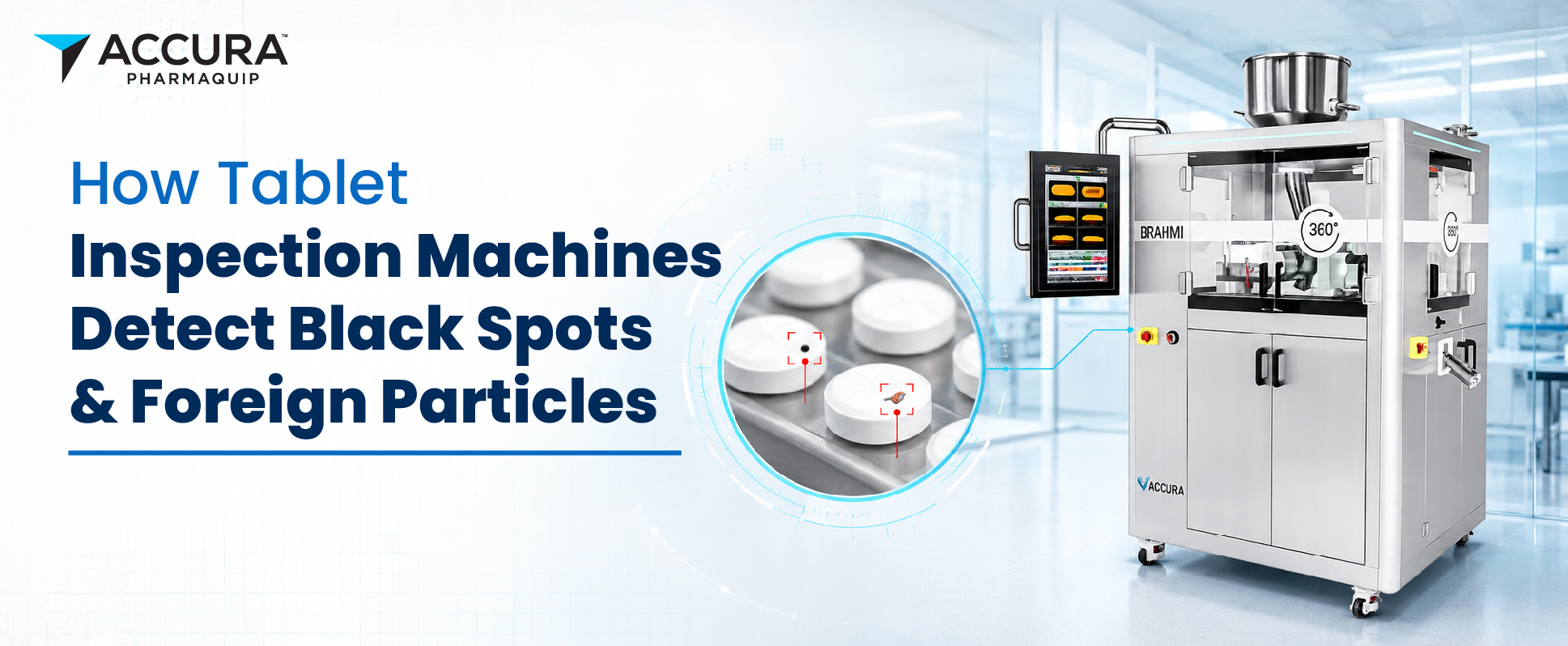
Accura employs cameras, software, and intelligent algorithms. Combined, these components detect defects in pills. It’s similar to having super-powered quality assurance personnel. Here is how it works:
Advanced Imaging Capabilities
Accura employs high-definition cameras. Special illumination aids in presenting all the details. These sophisticated devices take transparent pictures of each tablet. This facilitates the identification of even slight defects.
Automated Defect Detection Algorithms
The program is coded to identify issues. It searches for inconsistencies, size discrepancies, and other defects. The algorithms quickly examine each tablet. Only tablets that pass the test move on further.
Real-Time Data Analysis and Reporting
Accura gathers data when inspecting. The information is analyzed and provided in reports. The reports provide insights into the quality control process. Problems are resolved immediately, avoiding future issues.
Advantages of Using Accura in Pharmaceutical Production
Implementing Accura has numerous advantages. It enhances quality, saves waste, and simplifies processes. Here’s a preview of what you can look forward to:
Increased Accuracy and Precision
Human error is reduced with Accura. The system identifies defects with great accuracy. This results in improved quality control. More defective pills are caught prior to packaging.
Lower Waste and Material Costs
Waste of resources and materials is avoided with earlier detection. Money is saved by not proceeding with unnecessary processes. Efficiency is maintained in the production process.
Simplified Quality Control Procedures
Accura automates the inspection process. This allows human resources to be freed for other purposes. Staff can concentrate on improvements and other areas of need. Efficiency and productivity are boosted.
Real-World Applications and Success Stories
Following are a few real-world examples in which Accura benefited pharmaceutical companies.
Case Study 1: Improved Capsule Quality
One firm had poor, inconsistent capsule fills. Accura was placed on their manufacturing line. Poorly filled capsules were immediately picked up by the Tablet system. This led to a significant reduction in defective parts. Capsule quality improved noticeably.
Case Study 2: Avoiding Tablet Imperfections
Another firm had issues with chipped tablets. Accura was integrated into their tablet production line. The system detected even the tiniest flaws. This prevented faulty tablets from being packaged. Tablet quality improved as a result.
Integrating Accura Into Existing Pharma Production Lines
Integrating Accura into your current setup is easy. It is designed to blend in with many types of lines. Here is how to get it up and running.
System Compatibility and Scalability
Accura accommodates multiple production lines. Be it a small or large organization, it can be configured. The system can be scaled according to varying production levels.
Training and Support for Implementation
Training is done by Accura. This assists your staff in effectively utilizing the technology. There is support for future queries and glitches. They help in a seamless transition.
Future of Tablet Inspection Machines in Pharmaceuticals
Tablet Inspection Machine is evolving continuously. Here are a few glimpses into what’s on the horizon in the future.
AI-Powered Quality Control
AI is enhancing the Tablet Inspection Machine. Machine learning can aid in finding even more difficult-to-spot defects. This takes quality control to the next level. Algorithms are becoming intelligent.
Predictive Analytics for Proactive Quality Management
Data analysis can foresee issues. Predictive analytics will avoid quality problems. Being proactive saves time and money. Businesses can be ahead of the curve on risks.
Conclusion
Accura’s Tablet Inspection Machine enhances quality and saves money. It also defends your company’s reputation. Discover Accura as a solution to quality control needs. Investing in quality assurance is worth it in the long term.