When it comes to producing medications and pharmaceutical products, keeping up with hygiene and quality standards is very important. The whole process needs to be under control so that no contamination takes place and all the products meet required quality standards.
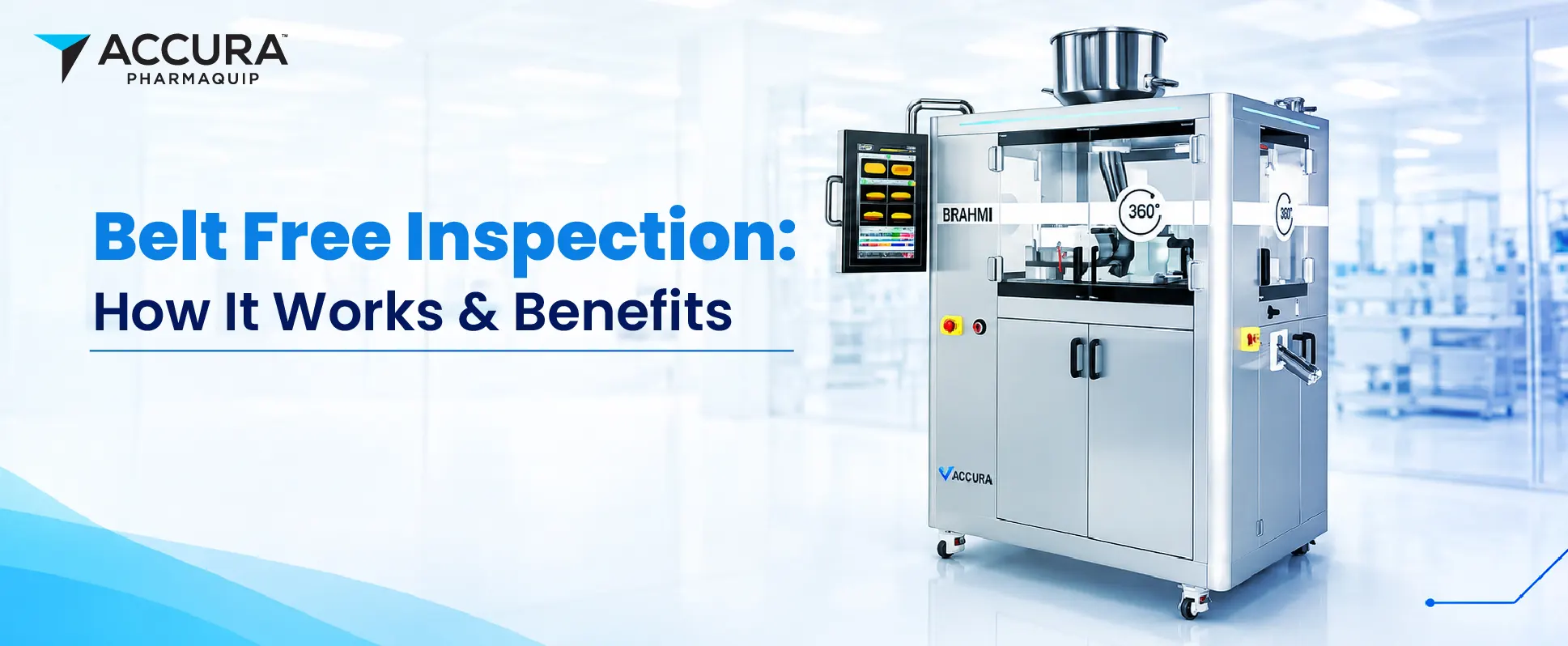
There are a lot of technologies and equipment designed to ensure these goals, one of which is the belt free inspection. This technology helps to improve inspection in a way that doesn’t require much contact with conveyor belts.
Here at Accura Pharmaquip, we are well-aware of the importance of having reliable inspection solutions when it comes to modern pharmaceutical production processes. This blog post will cover the concept of belt free inspection and its benefits for pharmaceuticals manufacturers.
What Is Belt Free Inspection?
A belt free inspection technique is an inspection technique where inspection of the products is carried out without the help of a conventional conveyor belt as the main supporting surface for the product during the inspection process.
In most cases, an inspection system uses a conveyor belt as the main tool in transferring products to the inspection area. Though very effective, there are certain drawbacks associated with the use of the belt.
The belt free technique tries to alleviate some of the problems associated with the belt through the use of a different mechanism to facilitate the transfer of products to the inspection area.
With respect to the application and design of the equipment, belt free inspection technique may be applied in inspecting the following pharmaceutical products for defects:
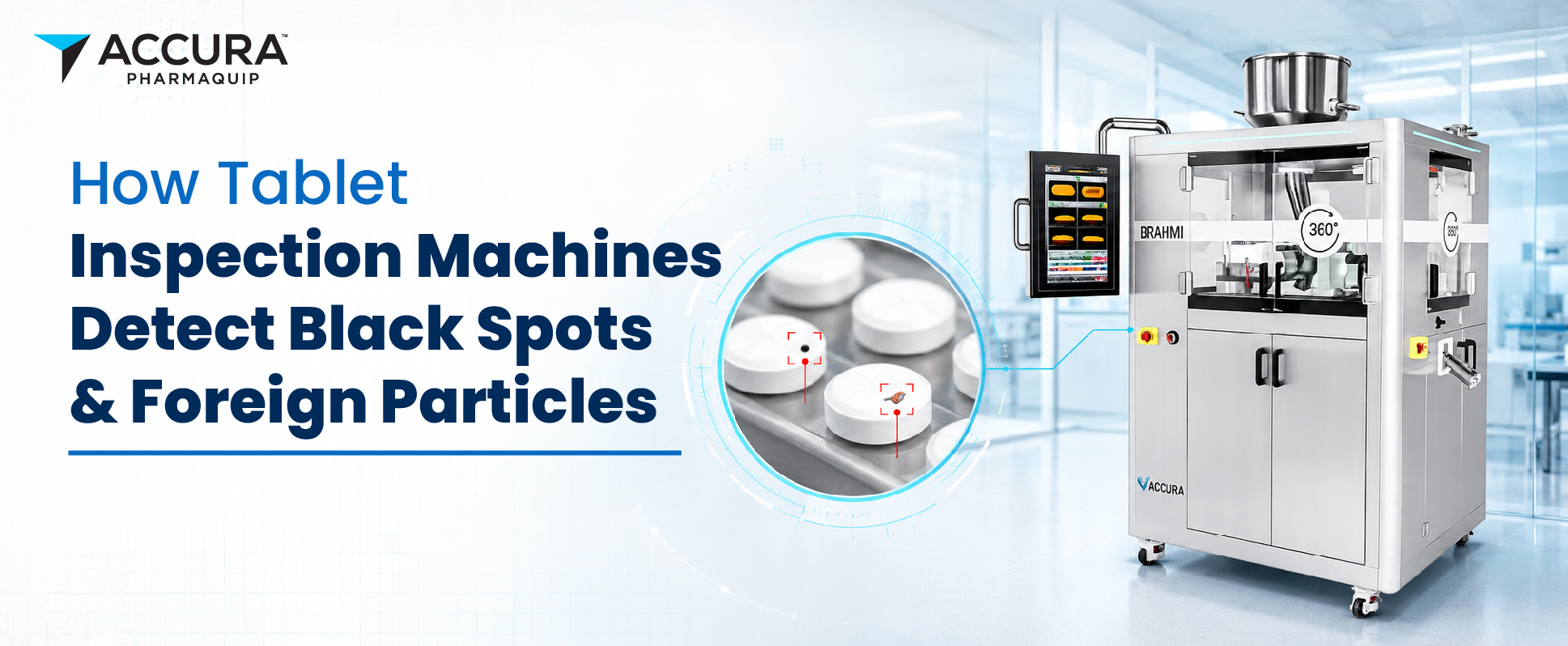
- Foreign particles or contamination
- Product defects
- Packaging irregularities
- Incorrect product positioning
- Visual abnormalities
- Other quality-related concerns
The exact inspection technology depends on the product, production line, and quality-control requirements.
How Does Belt Free Inspection Work?
The working principle of a belt-free inspection system varies according to the equipment and application. However, the general process involves controlled product movement, inspection, and rejection or acceptance.
1. Product Feeding
Products are introduced into the inspection system through a controlled feeding mechanism. The system is designed to maintain consistent product movement and positioning.
Proper product orientation is important because it helps inspection equipment capture clear and consistent images or measurements.
2. Controlled Product Movement
Instead of depending entirely on a conventional conveyor belt, the system uses an appropriate transport or handling mechanism to move products through the inspection area.
This controlled movement helps maintain a consistent inspection environment and can reduce unnecessary contact with surfaces.
3. Inspection
The product passes through the inspection zone, where appropriate inspection technologies examine it.
Depending on the application, this may involve cameras, sensors, lighting systems, or other inspection technologies. Automated systems can analyze products according to predefined quality parameters.
4. Defect Detection
The inspection system identifies products that do not meet the specified criteria.
Automated inspection can help manufacturers detect inconsistencies more efficiently than relying solely on manual visual inspection, particularly in high-speed production environments.
5. Product Acceptance or Rejection
Products that meet the required inspection parameters continue through the production line. Products identified as defective can be automatically separated for further investigation or disposal.
This creates a more consistent quality-control process and helps prevent potentially defective products from moving further into production or packaging.
Why Is Belt Free Inspection Important?
Pharmaceutical manufacturing requires careful control of product quality and production conditions. Even small defects or contaminants can have significant consequences.
Belt free inspection can contribute to a more controlled inspection process in several ways.
Improved Hygiene and Cleanability
The cleanliness levels that must be achieved in pharmaceutical settings are very high indeed.
The reduced use of traditional conveyor belts could help make some aspects of maintenance much simpler, depending on how the system has been designed. This would be especially useful in settings where cleanliness is a critical factor.
Reduced Risk of Cross-Contamination
Careful management of product-contact surfaces is important for pharmaceutical production processes.
A properly designed beltless system could facilitate reduced product contact with the common surfaces of the conveyer, thus improving contamination control practices.
On the other hand, the extent of the reduction of the contamination risk will depend on the design, materials, cleaning process, and other factors.
Consistent Inspection
Automated inspection systems can provide consistent inspection conditions across production runs.
Unlike manual inspection, which can be affected by operator fatigue or variations in attention, automated systems can apply predefined inspection criteria repeatedly.
Faster Production
Modern pharmaceutical production lines often operate at high speeds. Manual inspection can become difficult when large volumes of products need to be checked.
Automated belt-free inspection systems can be integrated into production processes to help inspect products efficiently while maintaining production throughput.
Better Quality Control
Inspection systems can help manufacturers identify defective products before they proceed further through the manufacturing or packaging process.
Early identification of quality issues can support better process control and reduce the likelihood of defective products reaching subsequent production stages.
Belt Free Inspection in Pharmaceutical Manufacturing
Pharmaceutical products are subject to stringent quality requirements. Depending on the product and manufacturing process, inspection may be required at different stages of production.
Belt-free inspection solutions can be particularly useful where manufacturers need to balance:
- Product quality
- Hygiene
- Inspection accuracy
- Production speed
- Equipment maintainability
- Contamination control
For example, an inspection system may be incorporated into a production line to examine products as they move through a controlled inspection area. The system can identify predefined defects and separate questionable products for additional quality evaluation.
The right solution should always be selected based on the specific product characteristics, production speed, inspection requirements, and applicable quality standards.
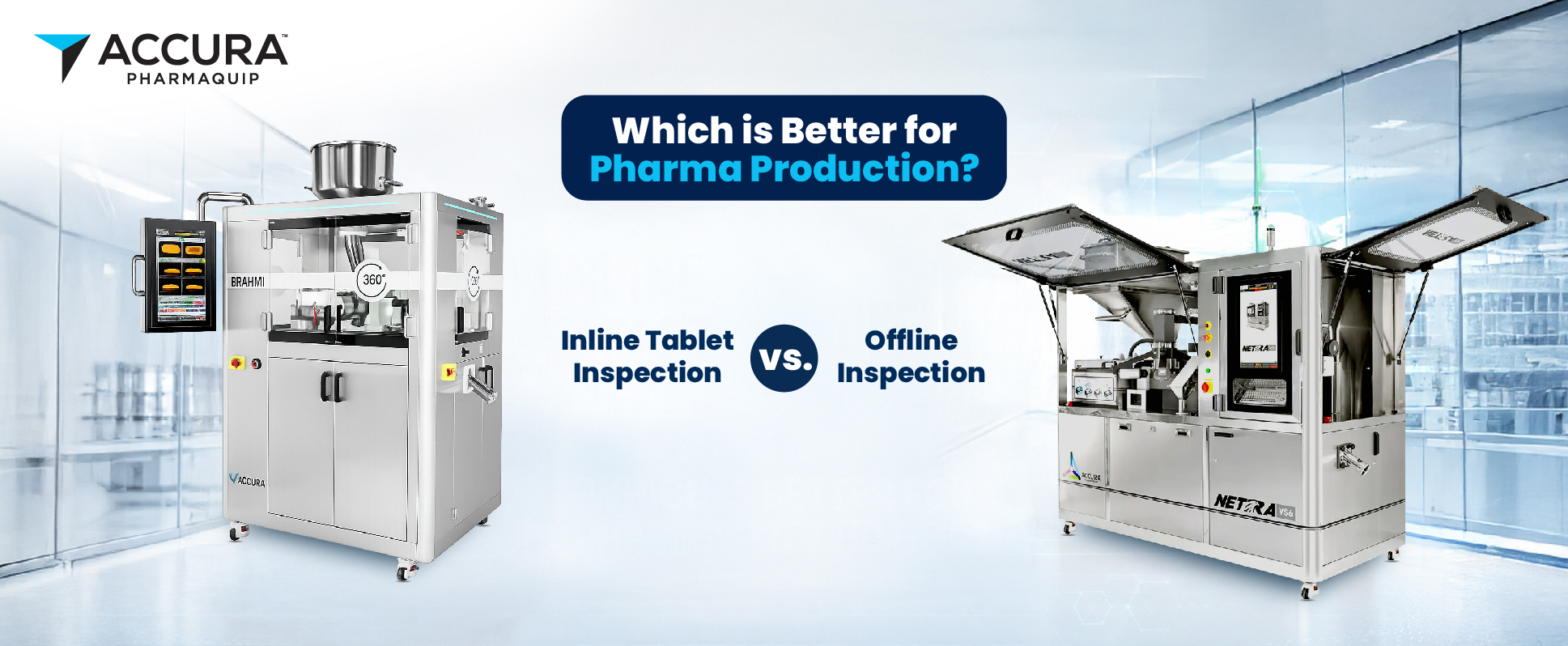
Belt Free Inspection vs. Conventional Belt-Based Inspection
Both belt-based and belt-free inspection systems can have a place in manufacturing. The appropriate option depends on the application.
| Factor | Belt-Based Inspection | Belt Free Inspection |
|---|---|---|
| Product transport | Conventional conveyor belt | Alternative controlled handling/transport |
| Cleaning considerations | Belt requires cleaning and maintenance | May reduce reliance on conventional belts |
| Product contact | Typically contacts conveyor belt | Can be designed to minimize certain contact points |
| Automation | Can be automated | Can be automated |
| Inspection consistency | High with suitable system design | High with suitable system design |
| Pharmaceutical applications | Widely used | Useful for applications requiring specific hygiene/handling considerations |
It is important not to assume that one approach is universally better. A qualified equipment manufacturer should evaluate the application before recommending a specific inspection configuration.
Key Factors to Consider When Choosing an Inspection System
Before investing in a belt free inspection solution, pharmaceutical manufacturers should consider several factors.
Product Characteristics
The size, shape, weight, material, and sensitivity of the product can influence the appropriate inspection and handling technology.
Inspection Requirements
Manufacturers should clearly define what they need to detect. Different defects may require different inspection technologies, lighting conditions, sensors, or imaging systems.
Production Speed
The inspection system should be capable of handling the required production throughput without creating unnecessary bottlenecks.
Cleaning and Maintenance
Equipment should be designed with practical cleaning and maintenance requirements in mind, particularly for pharmaceutical environments.
Integration
The inspection system should be compatible with the existing production line and other equipment wherever possible.
Regulatory and Quality Requirements
Pharmaceutical manufacturers must consider applicable regulatory, validation, documentation, and quality requirements when implementing inspection equipment.
The Role of Automation in Modern Inspection
Careful management of product-contact surfaces is important for pharmaceutical production processes.
A properly designed beltless system could facilitate reduced product contact with the common surfaces of the conveyer, thus improving contamination control practices.
On the other hand, the extent of the reduction of the contamination risk will depend on the design, materials, cleaning process, and other factors.
Why Choose Accura Pharmaquip?
At Accura Pharmaquip, we acknowledge the importance of using equipment that is reliable, functional, hygienic and suited for production processes by pharmaceuticals.
Our philosophy lies in comprehending the exact needs for each application process, as opposed to considering all production lines to be equal. What matters is having the best inspection equipment depending on what the product and process are, the environmental conditions and quality required.
Choosing the right equipment for the particular situation can have a huge impact on your production process.
Conclusion
The belt free inspection method is a way of performing inspections in pharmaceutical manufacturing that may enable pharmaceutical manufacturers to meet some of the most important demands for their products.
The inspection process becomes much more efficient and reliable thanks to the reduced usage of the traditional conveyor belts as well as through the use of proper product-handling and inspection equipment.
At the same time, it is important to note that the success of any type of inspection depends heavily on the selection of the proper technology for the particular process. Such things as the specifics of the products, the goals of the inspection, production speed, cleaning, and regulatory requirements should all be taken into consideration beforehand.
If you need help identifying the proper equipment for your inspection process, feel free to contact Accura Pharmaquip.
FAQs
What is belt free inspection?
Belt free inspection is a product inspection method that minimizes reliance on conventional conveyor belts during the inspection process.
How does belt free inspection work?
Products are moved through a controlled inspection area where cameras, sensors, or other technologies check them for defects or abnormalities.
What are the benefits of belt free inspection?
It can support improved hygiene, consistent inspection, reduced product contact, and efficient quality control.
Is belt free inspection suitable for pharmaceutical manufacturing?
Yes. It can be suitable for pharmaceutical applications where hygiene, product handling, and automated inspection are important.
What can belt free inspection detect?
Depending on the system, it can help identify foreign particles, product defects, packaging issues, and other predefined quality problems.
Why choose Accura Pharmaquip for inspection solutions?
Accura Pharmaquip provides pharmaceutical equipment solutions designed around specific production, quality, and operational requirements.