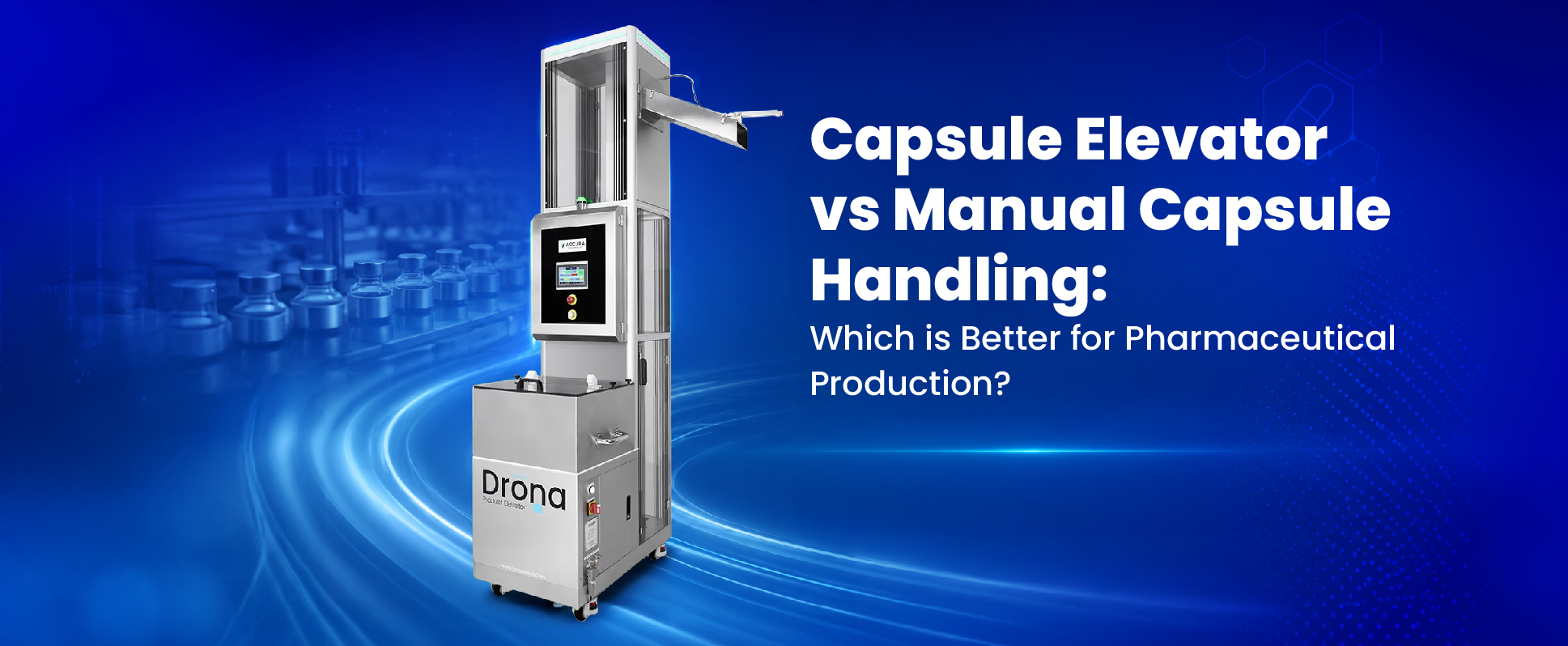
What Is a Capsule Elevator?
Capsule elevators are primarily automated systems that enable safe and efficient transportation of capsule materials among various phases of the drug manufacturing process. Capsule elevators are used to elevate and transport capsules from bins, buckets, or other containers to a capsule filler, packaging device, or a storage area with limited operator involvement.How Does It Work?
Capsules are transferred into an elevator hopper from where they are lifted by a controlled lifting mechanism to the necessary elevation or to some processing machinery. The capsule lift process is designed to provide smooth, clean and safe movement of capsules in order to minimize potential for both damage and dust generation.Integration with Pharmaceutical Production Lines
Capsule elevators can be integrated with:- Capsule filling machines
- Packaging lines
- Sorting systems
- Inspection equipment
- Storage containers
Industries Using Capsule Elevators
- Pharmaceuticals: Efficient transfer of medicinal capsules during large-scale production.
- Nutraceuticals: Handling of dietary supplements and health products.
- Healthcare Supplements: Automated movement of capsules in supplement manufacturing facilities.
What Is Manual Capsule Handling?
Manual capsule handling refers to the traditional method of transporting capsules between different production stages using operators and handheld containers. In this process, workers manually load, carry, transfer, and unload capsules throughout the manufacturing cycle.Common Manual Handling Practices
- Carrying capsules in trays or bins
- Manual loading into machines
- Hand-operated transfer between departments
- Manual unloading during packaging operations
Commonly Used In
- Small-scale manufacturing facilities
- Pilot production setups
- Low-volume production environments
Challenges of Manual Capsule Handling
- Product Spillage: Manual movement increases the chances of capsule loss during transfer.
- Higher Contamination Risk: Frequent human contact may compromise product hygiene and cleanroom standards.
- Labor Dependency: Operations heavily rely on manpower availability and operator efficiency.
- Inconsistent Handling: Variations in handling practices can affect production consistency and workflow speed.
Capsule Elevator vs Manual Capsule Handling
| Parameter | Capsule Elevator | Manual Handling |
|---|---|---|
| Productivity | High | Moderate/Low |
| Labor Requirement | Minimal | High |
| Contamination Risk | Low | Higher |
| GMP Compliance | Excellent | Limited |
| Product Loss | Minimal | More likely |
| Workflow Efficiency | Streamlined | Slower |
| Operator Fatigue | Reduced | High |
| Scalability | Easy | Difficult |
Benefits of Using Capsule Elevators in Pharmaceutical Production
A. Improved Production Efficiency
The automation of the handling of capsules can guarantee a continuous transfer of capsules on production lines.Advantages
- Faster capsule movement
- Reduced production downtime
- Continuous workflow support
- Improved line productivity
B. Enhanced Hygiene & Contamination Control
Most modern capsule lifts have been developed with a pharmaceutical clean room environment in mind.Hygiene Benefits
- Closed transfer systems
- Reduced human contact
- Better dust control
- Improved cleanroom compatibility
C. Lower Labor Cost
Manual labor is reduced as fewer repetitive handling steps are required due to automation of manual tasks.Operational Benefits
- Lower workforce dependency
- Better manpower utilization
- Reduced operator workload
D. Reduced Product Damage & Spillage
Using an automatic capsule transfer system can help prevent accidental spillage/damage of product during transfer when compared to use of an uncontrolled manual transfer method.Key Advantages
- Better product integrity
- Reduced material wastage
- Consistent handling process
E. Better GMP Compliance
Automated capsule lift systems have a better ability for compliance with the manufacturing practices (GMP) requirements of all pharmaceutical companies.GMP-Friendly Features
- Stainless steel construction
- Easy cleaning access
- Validation support
- Hygienic machine design
When Manual Capsule Handling May Still Be Used
While automation is beneficial in many ways, some situations may make manual capsule transferring acceptable.- Small-Scale Production Facilities: Low-volume operations may not need full automation at first.
- Limited Production Volumes: Manufacturers of small quantities (small-batch) can possibly manage using a manual system for small batches.
- Budget Constraints: Many manufacturers do not make an initial investment in automation when first starting their business due to budget constraints.
- Pilot or Temporary Manufacturing Setups: Often temporary pilot manufacturing sites use manual handling.
Why Manufacturers Eventually Shift Toward Automation
As volume increases, manufacturers transition from manual to automated systems in order to decrease risk of contamination; streamline operations; and be compliant with stricter GMP guidelines.- Industries & Applications: Elevators for capsules are being utilized by multiple industries that manufacture pharmaceutical products and health care related products.
- Capsule Filling Lines: Capsules can be fed to a machine that continuously feeds capsules onto the machines’ table while it is in operation.
- Tablet and Capsule Packaging Units: Products are moved through systems efficiently so as to maximize packaging efficiency.
- Nutraceutical Manufacturing: Vitamins, supplements and wellness products are handled by this type of equipment.
- Contract Manufacturing Organizations (CMOs): This product line supports large scale CMO’s with multiple products.
- R&D and Pilot Plants: Equipment used in these applications provide controlled environment for research and development activities.
Key Features to Look for in a Capsule Elevator
When selecting a pharma capsule elevator, manufacturers should evaluate features that improve performance, hygiene, and operational flexibility.Important Features
- GMP-compliant machine design
- Stainless steel construction
- Easy cleaning and maintenance
- Adjustable lifting height
- Dust-free operation
- Integration compatibility
- Energy-efficient performance
- Compact footprint for cleanrooms
Why Choose Accura Pharmaquip
Accura Pharmaquip offers state-of-the-art manufacturing equipment specifically engineered for use in the pharmaceutical manufacturing sector including hygienic, reliable, and high-productivity processes.- Expertise in Pharmaceutical Process Equipment: Industry-specific Experience combined with application-based design methodology.
- High-Quality GMP-Compliant Machinery: Manufacturing machinery compliant with pharmaceutical regulations.
- Custom-Engineered Solutions: Specifically designs and builds equipment to fit each manufacturer’s unique needs as well as their current facility layout.
- Reliable After-Sales Support: Supports customers through technical expertise; installation; on-going product support.
- Proven Industry Experience: Trusted by pharmaceutical and nutraceutical manufacturers across various applications.
Conclusion
Efficient capsule management is a necessity of the industry’s ability to be productive, maintain good hygiene practices, and follow regulatory compliance requirements. In comparison to traditional manual methods of handling capsules, capsule elevators provide significant benefits relative to operating efficiently and controlling contamination. By automating capsule transfer processes, manufacturers can achieve:- Higher production efficiency
- Better hygiene standards
- Reduced labor dependency
- Lower product loss
- Improved GMP compliance
- Streamlined manufacturing workflows
FAQs
What is the purpose of a capsule elevator in pharmaceutical manufacturing?
An automated capsule elevator can be used to move capsules from one stage of production to the next. It enables better production efficiencies, better cleanliness/hygiene levels as well as it provides consistency of operations.
How does a capsule elevator improve GMP compliance?
Automated capsule elevators assist in reducing employee interaction with equipment, support a “dust-free” environment during transfer operations, and utilize hygienically constructed materials such as stainless steel, which is acceptable for GMP compliant production areas.
Can capsule elevators be integrated with existing production lines?
Most modern capsule elevators have been designed to easily interface with various levels of production including but limited to; capsule filling machines, packaging machinery, and material handling systems.
Are capsule elevators suitable for nutraceutical manufacturing?
Yes. Automated capsule elevators have become a staple in the design of many nutraceutical and healthcare supplement production facilities due to their ability to transfer capsules in a clean/hygiene-controlled manner.
What are the maintenance requirements for capsule elevators?
You should clean all surfaces; inspect components; lubricate moving parts; and perform routine preventive maintenance to make sure your capsule elevator is reliable for the duration of its service life.